Analyzing the Private Rental Housing Market in Shanghai with Open Data
Published in Land Use Policy, 2019
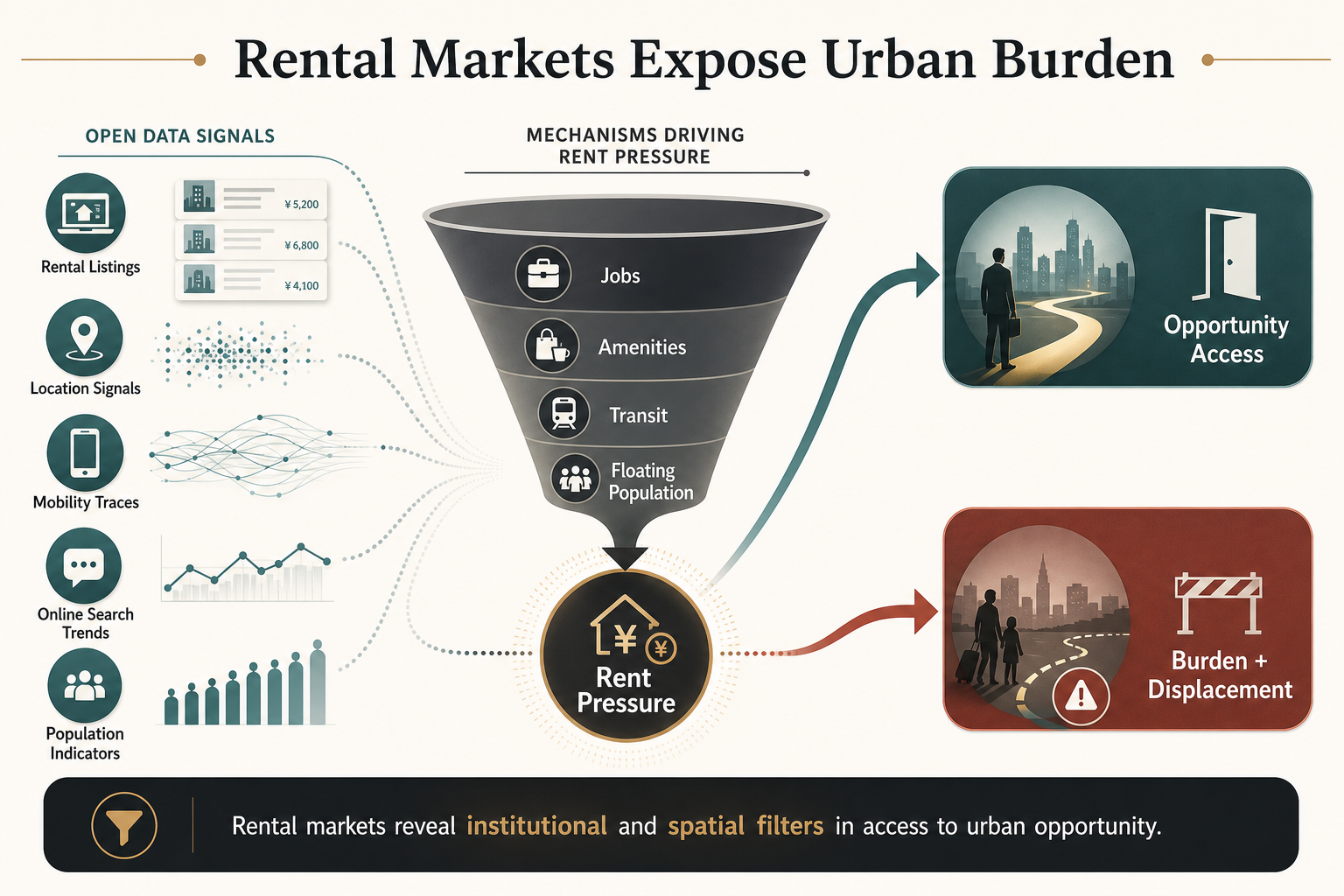
Core contribution: This article treats the private rental market as a key lens for understanding the burden side of urban opportunity. It shows that rents are not only shaped by jobs, amenities, and transit, but also by institutional and spatial filters that push disadvantaged and non-native groups into longer commutes and weaker access to opportunity.
Highlights
- Shifts attention from ownership prices to rental markets as an everyday affordability mechanism.
- Links rent pressure to employment access, service amenities, transit infrastructure, and floating population geography.
- Shows how rental affordability becomes entangled with institutional exclusion and unequal commuting burdens.
- Positions rental housing policy as part of opportunity access rather than only housing supply.
核心贡献: 本文把私人租赁市场作为理解城市机会背后居住负担的重要窗口。研究指出,租金不仅由就业、设施与交通条件塑造,也受到制度与空间过滤机制影响,使弱势群体和非本地人口更容易承受通勤负担与机会可及性不足。
核心亮点
- 将研究视角从产权住房价格转向日常负担更直接的租赁市场。
- 把租金压力与就业可达性、服务设施、交通基础设施和流动人口空间分布联系起来。
- 揭示租赁可负担性如何与制度排斥和不平等通勤负担交织在一起。
- 强调租赁住房政策不仅是供给问题,也是城市机会可及性问题。